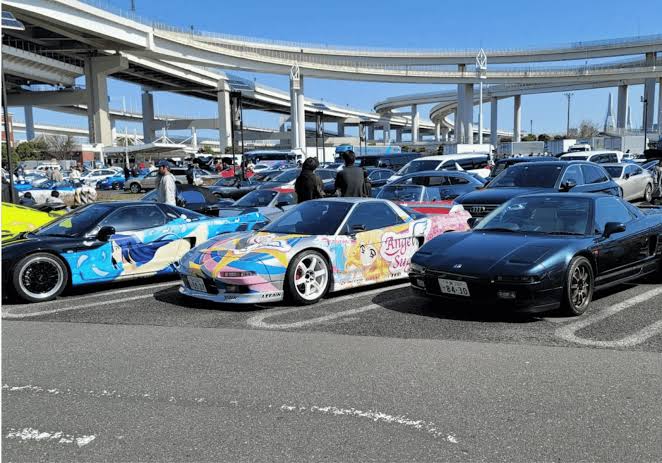
Search for "Daikoku PA opening hours" and you'll find a confusing answer: there aren't any. It's an expressway rest area — vehicles can pull in at 4 a.m. on a Tuesday or 9 p.m. on a Saturday, no gates, no tickets. What actually matters for your daikoku drift experience is the unofficial schedule of the meet itself: when the tuned cars show up, when the tours run, and when the lot is just trucks and vending machines. That's the schedule this page maps out.
Quick summary
| Question | Answer |
|---|---|
| PA opening hours | 24/7 for vehicles — it's a rest stop, no gates |
| Meet peak hours | Fri & Sat, ~20:00–24:00; builds from 19:00 |
| Daytime meet | Sunday mornings ~7:00–11:00 (classics, bikes, supercars) |
| Tour departures | Mostly 17:00–22:20 from central Tokyo |
| Quietest window | Weekday daytime — skip it |
| Weather rule | Rain = near-empty lot; check forecast before booking |
| Closure risk | Occasional temporary police closures; tours reroute |
The real weekly schedule of the Daikoku meet
No club publishes a timetable — the rhythm below comes from how the scene has run for years and from what tour operators plan around. Treat it as strong probability, not a guarantee: the whole charm of Daikoku is that nobody controls the lineup.
| Day | What to expect | Verdict |
|---|---|---|
| Monday–Thursday nights | Regulars and small crews from ~21:00; sparse but authentic; easiest photography | Good value |
| Friday night | The week's first big meet; clubs arrive in convoys from ~20:00 | Excellent |
| Saturday night | Peak of the week — fullest rows, most variety, biggest tour convoys | Best overall |
| Sunday morning | Different scene entirely: classics, kyusha, superbikes, supercar breakfast runs, ~7:00–11:00 | Best daytime |
| Sunday night | Winds down early — many owners work Monday | Average |
| Rainy any-day | Show cars stay home; trucks and umbrellas | Avoid |
Tour departure times, decoded
Tours on the official GetYourGuide listings cluster into three windows, and the choice changes your night more than the operator does:
- Early evening (17:00–18:00). The sightseeing-heavy slot: Rainbow Bridge at dusk, A-PIT Autobacs while it's open, Tokyo Tower lit, then Daikoku as the meet builds. Often the cheapest listed times. Best for families and first-timers.
- Prime time (19:30–20:30). Arrives at Daikoku exactly when the rows fill. The most-booked window — reserve this one 5–7 days ahead for Saturdays.
- Midnight run (22:00+). Skips shopping and sightseeing; emptier expressways, harder cruising, rarer builds that only surface late. Several operators exclude under-15s from this slot and note it's "no sightseeing" in the listing.
Total duration is 3–4 hours in every window, with roughly 60–90 minutes at the PA itself. If your evening is tight, check each listing's drop-off note — late tours often include free drop-off anywhere in Tokyo's 23 wards, which quietly saves you a ¥3,000+ taxi.
Season by season
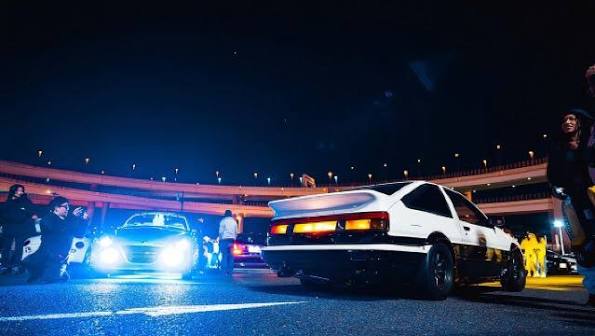
Spring (March–May) and autumn (October–November) are the sweet spots: dry, mild nights that keep owners out until midnight and let you stand around comfortably — remember this is an outdoor experience on a windy port island. Summer runs hot and humid with sudden downpours and the odd typhoon; meets still happen but check the radar, not just the forecast. Winter nights are cold and clear — smaller crowds, crisp photos, and the Sunday morning meets actually get better because daytime is the warm slot. There is no off-season; there are only wet nights.
Closures: the one schedule risk that matters
A few times a year, police temporarily close Daikoku PA to non-truck traffic — usually after a night gets too loud or during periodic crackdowns. Operators are upfront about this: listings state that if Daikoku is closed, the tour reroutes to another meet spot such as Tatsumi PA or Umihotaru PA, both legitimate scenes in their own right. You can't predict closures, but you can plan around them: book Daikoku for your first or second night in Tokyo, so a rebooking still fits your trip, and treat the reroute as a variant of the same experience rather than a failure — the cars follow the same logic everywhere.
Building your evening around the tour
The practical schedule for a prime-time tour looks like this: finish dinner by 19:00 near your meeting point (Shibuya, Akihabara and Odaiba are the common ones), arrive 15 minutes early — operators state delays over 15 minutes can forfeit the seat — cruise out by 20:00, walk the meet 21:00–22:30, and be dropped back between 23:00 and midnight. Trains in Tokyo stop around 00:30–01:00, so late slots pair best with tours that include 23-ward drop-off. Slot the PA experience guide into your reading before you go — etiquette matters more than timing once you're in the lot.
Hours & schedule — FAQ
What are Daikoku PA's official opening hours?
What time should I arrive for the biggest meet?
Is there anything to see during the day?
Do meets happen in winter?
What happens if Daikoku PA is closed on my tour night?
How long do tours actually spend at Daikoku?
The short version of the daikoku drift experience schedule: any dry Friday or Saturday night, arriving around 21:00, will deliver. Everything else — early slots, midnight runs, Sunday classics — is a flavour choice. Pick the window, book the free-cancellation slot, and let the weather make the final call.